
For many independent filmmakers across Africa, the dream has often been the same:
Make a great film, Get selected by a prestigious festival, Secure a distributor.
Find an audience, Build a career.
Yet the reality of modern filmmaking has exposed a difficult truth:
Great films do not automatically find audiences.
In fact, some of the most celebrated films on the festival circuit never reach meaningful audiences at all.
This is not necessarily because the films are weak. More often, it is because the systems surrounding those films are stronger in some regions than in others.
This is where understanding European cinema becomes valuable—not as a model to imitate blindly, but as a case study in how film ecosystems are built.
The lesson is not that Europe makes better films.
The lesson is that Europe has spent decades building stronger structures around filmmaking.
And for emerging African filmmakers, there is much to learn from that distinction.
EUROPEAN CINEMA IS MORE THAN A GEOGRAPHY.
When many people hear the term “European Cinema,” they think of films from France, Germany, Italy, Spain, the United Kingdom, Belgium, the Netherlands, Sweden, Denmark, and other European countries.


For many independent filmmakers across Africa, the dream has often been the same:
Make a great film, Get selected by a prestigious festival, Secure a distributor, Find an audience, Build a career.
Yet the reality of modern filmmaking has exposed a difficult truth:
Great films do not automatically find audiences.
In fact, some of the most celebrated films on the festival circuit never reach meaningful audiences at all.
This is not necessarily because the films are weak. More often, it is because the systems surrounding those films are stronger in some regions than in others.
This is where understanding European cinema becomes valuable—not as a model to imitate blindly, but as a case study in how film ecosystems are built.
The lesson is not that Europe makes better films.
The lesson is that Europe has spent decades building stronger structures around filmmaking.
And for emerging African filmmakers, there is much to learn from that distinction.
European Cinema Is More Than Geography
When many people hear the term “European Cinema,” they think of films from France, Germany, Italy, Spain, the United Kingdom, Belgium, the Netherlands, Sweden, Denmark, and other European countries.
But European cinema is not simply a collection of films from Europe.
It is an interconnected ecosystem.
It consists of:
* Film funds
* Distribution networks
* Public financing structures
* Film commissions
* Cinema chains
* Broadcasters
* Co-production treaties
* Film markets
* Festivals
* Audience development initiatives
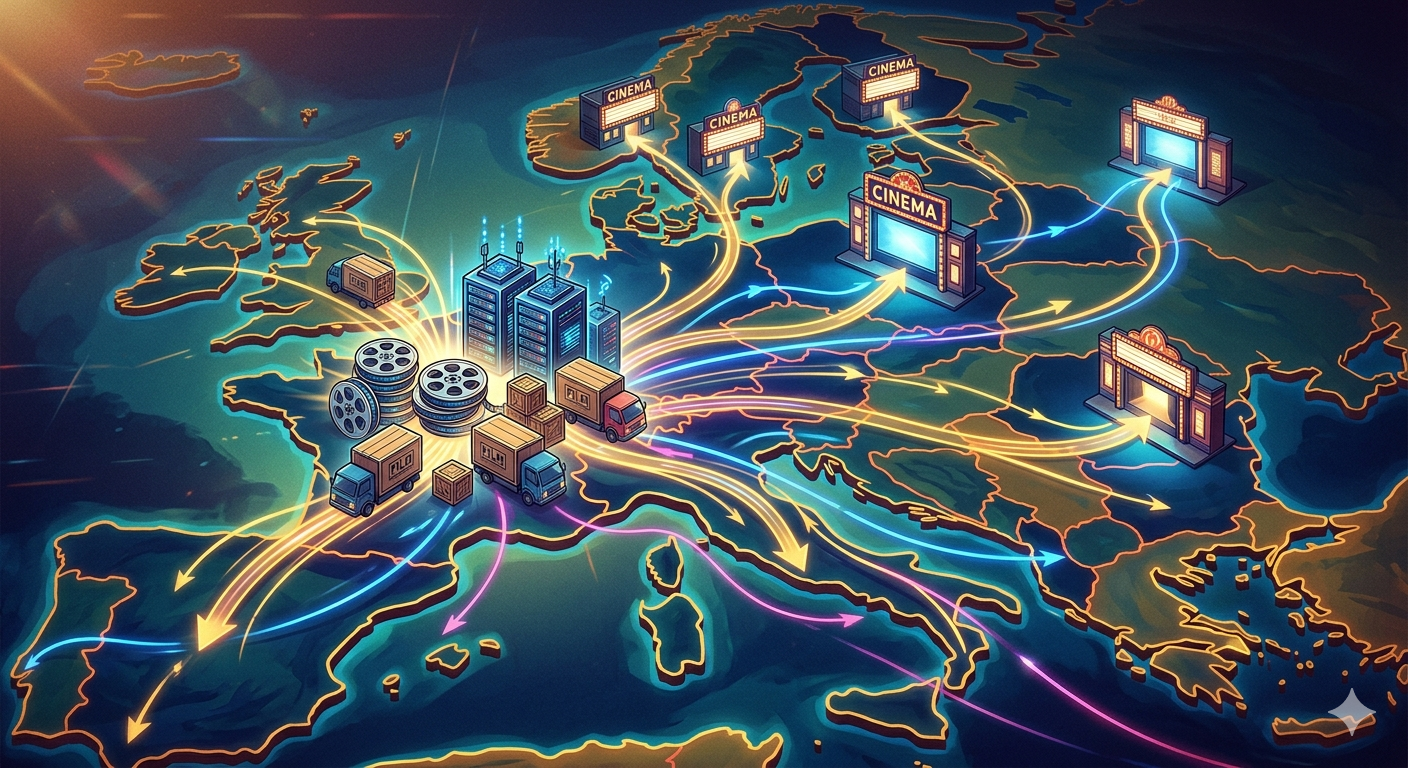
In many European countries, filmmaking is viewed not only as entertainment but as culture, infrastructure, and economic activity.
As a result, significant resources exist to support films from development to distribution.
The film is not left to survive on its own.
The ecosystem supports it.
The Difference Between Making Films and Building Film Industries
One of the most important distinctions emerging filmmakers must understand is this:
Making films is not the same as building a film industry.
A country can produce hundreds of films every year and still struggle with distribution.
A country can have talented filmmakers and still face audience access challenges.
A country can have successful productions and still lack sustainable infrastructure.
What separates many mature film industries from developing ones is not necessarily creative quality.
It is system design.
The strongest film industries understand that production is only one part of the value chain.
Distribution is equally important.
Audience development is equally important.
Market creation is equally important.
Without these components, films often struggle to reach their full potential.
Why European Films Travel
Many European films receive global exposure despite being produced in languages that are not widely spoken internationally.
Why?
Because the ecosystem was designed to help films travel.
Before release, many projects already have:
* Sales agents
* Distribution partners
* Festival strategies
* Marketing plans
* Media relationships
* Audience positioning
The conversation around visibility begins long before the film is completed.
Distribution is treated as part of filmmaking itself.
Not as an afterthought.
This is one of the most valuable lessons independent filmmakers can adopt.
THE DISTRIBUTION LESSON AFRICAN FILMMAKERS MUST UNDERSTAND
A common misconception among emerging filmmakers is that distribution begins after post-production.
In reality, distribution begins the moment a project enters development.
The strongest filmmakers ask questions such as:
Who is this film for?
Why would they care?
Where do they consume content?
How will they discover this film?
What partnerships can amplify visibility?
What communities already exist around this story?
These questions shape production decisions long before release.
The result is a film that is designed not only to be watched, but to be found.
THE AUDIENCE ECONOMY HAS CHANGED
The modern audience no longer waits for cinemas, broadcasters, or distributors to determine what they watch.
Audiences are now discovered through:
* Social media
* Online communities
* Streaming platforms
* Creator ecosystems
* Direct-to-consumer channels
* Community screenings
* Digital events
Attention has become decentralized.
This creates both a challenge and an opportunity.
The challenge is increased competition.
The opportunity is greater access.
For the first time in film history, independent filmmakers have tools that allow them to reach audiences directly.
The question is whether they are prepared to use them.
THE REAL COMPETITIVE ADVANTAGE
Many filmmakers believe budget is the biggest obstacle.
Often, it is not.
The biggest advantage in modern filmmaking is audience ownership.
A filmmaker with a loyal community possesses leverage.
That leverage can create:
* Better distribution opportunities
* Stronger partnerships
* Crowdfunding success
* Higher attendance
* Greater visibility
* Sustainable careers
An audience is no longer simply a destination.
It is an asset.
This reality is changing the economics of independent filmmaking globally.
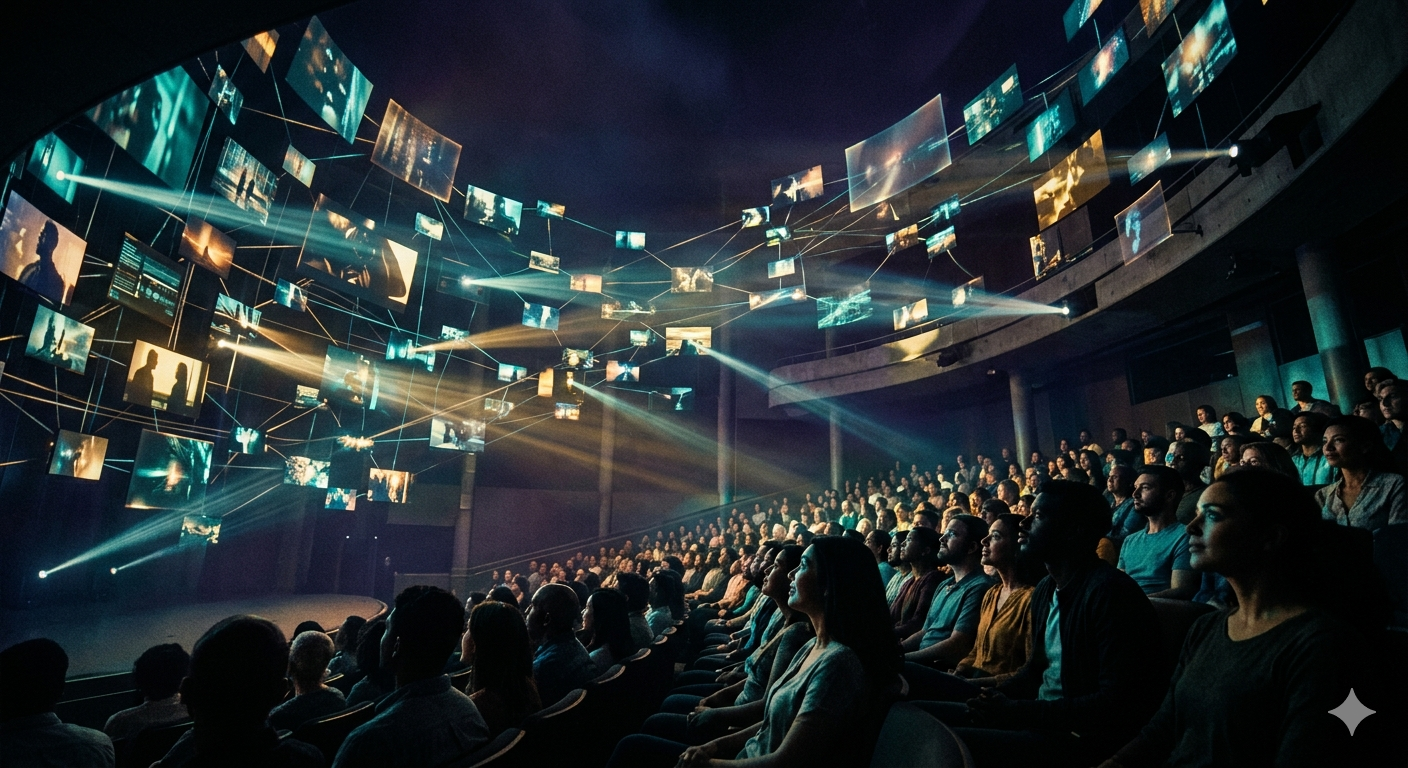
WHY AFRICAN FILMMAKERS SHOULD STUDY ECOSYTEM, NOT JUST FILMS
The temptation is often to study successful films.
A more strategic approach is to study successful ecosystems.
Questions worth asking include:
How was the audience built?
Who financed the visibility?
What partnerships existed?
What distribution channels were activated?
What communities were engaged?
What happened before the release?
These questions often reveal that success was not accidental.
It was engineered.
THE FUTURE BELONGS TO AUDIENCE CENTRIC FILMMAKERS
The next generation of filmmakers will not be defined solely by creative ability.
They will be defined by their ability to connect stories with audiences.
The filmmaker of the future must understand:
* Storytelling
* Branding
* Positioning
* Community building
* Collaboration
* Distribution strategy
These are no longer optional skills.
They are part of the profession.
The industry is evolving from a production-first model toward an audience-first model.
Those who adapt will possess greater independence, greater leverage, and greater sustainability.
The greatest lesson African filmmakers can learn from European cinema is not about cameras, budgets, or production value.
It is about infrastructure.
European cinema demonstrates what happens when storytelling is supported by systems designed to help films reach audiences.
For independent filmmakers, the challenge is not simply making films.
It is building pathways between stories and the people who need to experience them.
Because in the end, the films that endure are rarely the ones that are merely produced.
They are the ones that are successfully positioned, distributed, and remembered.